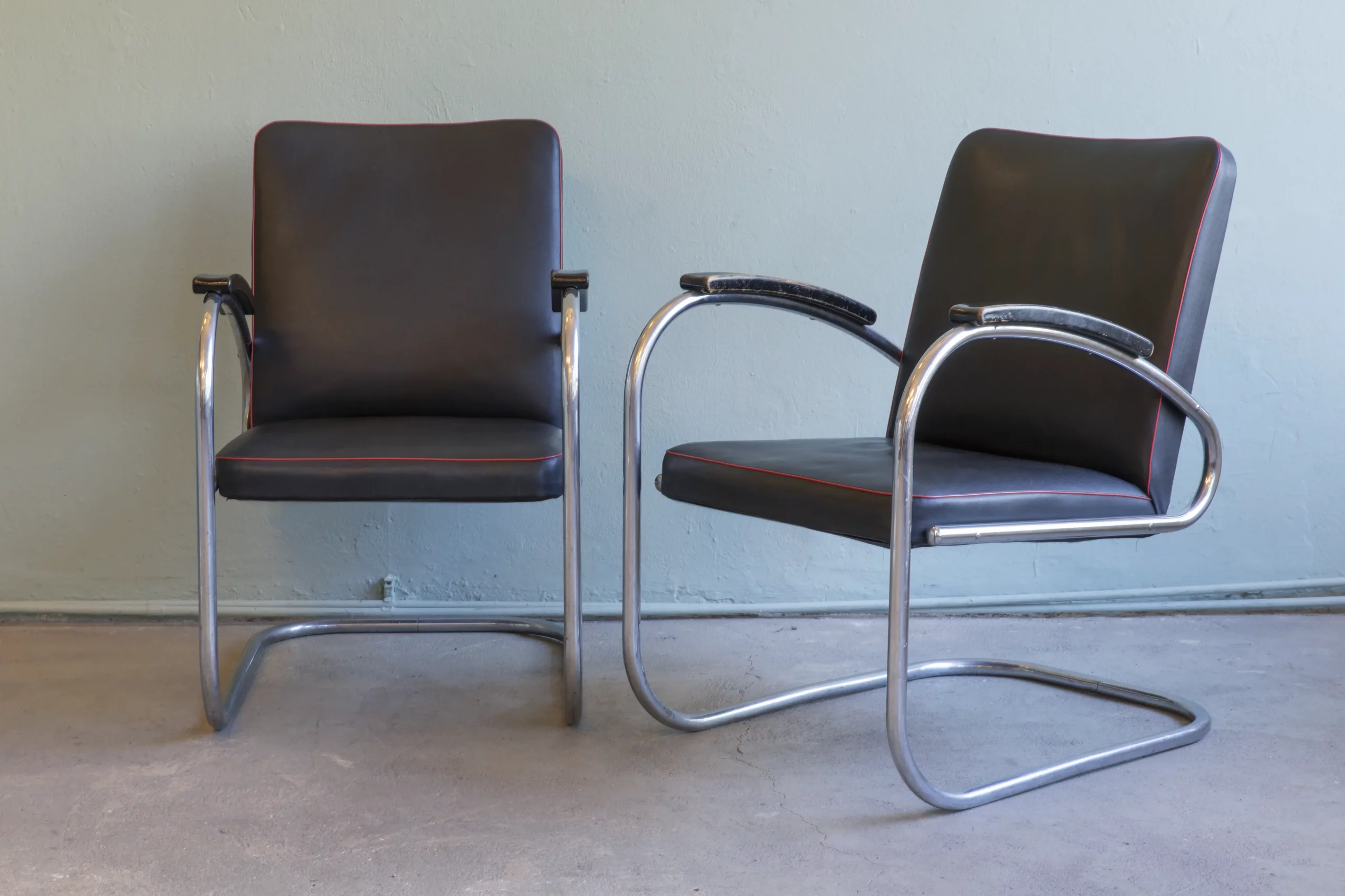
Halabala H164 cantilever chair from Jindřich Halabala – 1930s modernism – brown
Style: Bauhaus, Bauhaus Modernism
Design: Jindřich Halabala
Manufacturer: UP Závody
Country: Czechoslovakia
Model: H164
Material: chromed tubular steel, solid wood armrests, original Eisengarn upholstery
H 87 cm W 53 cm D 51 cm
Year: 1930s
Condition: original, museum-grade condition
Quantity: 1
Price: 3.400 €
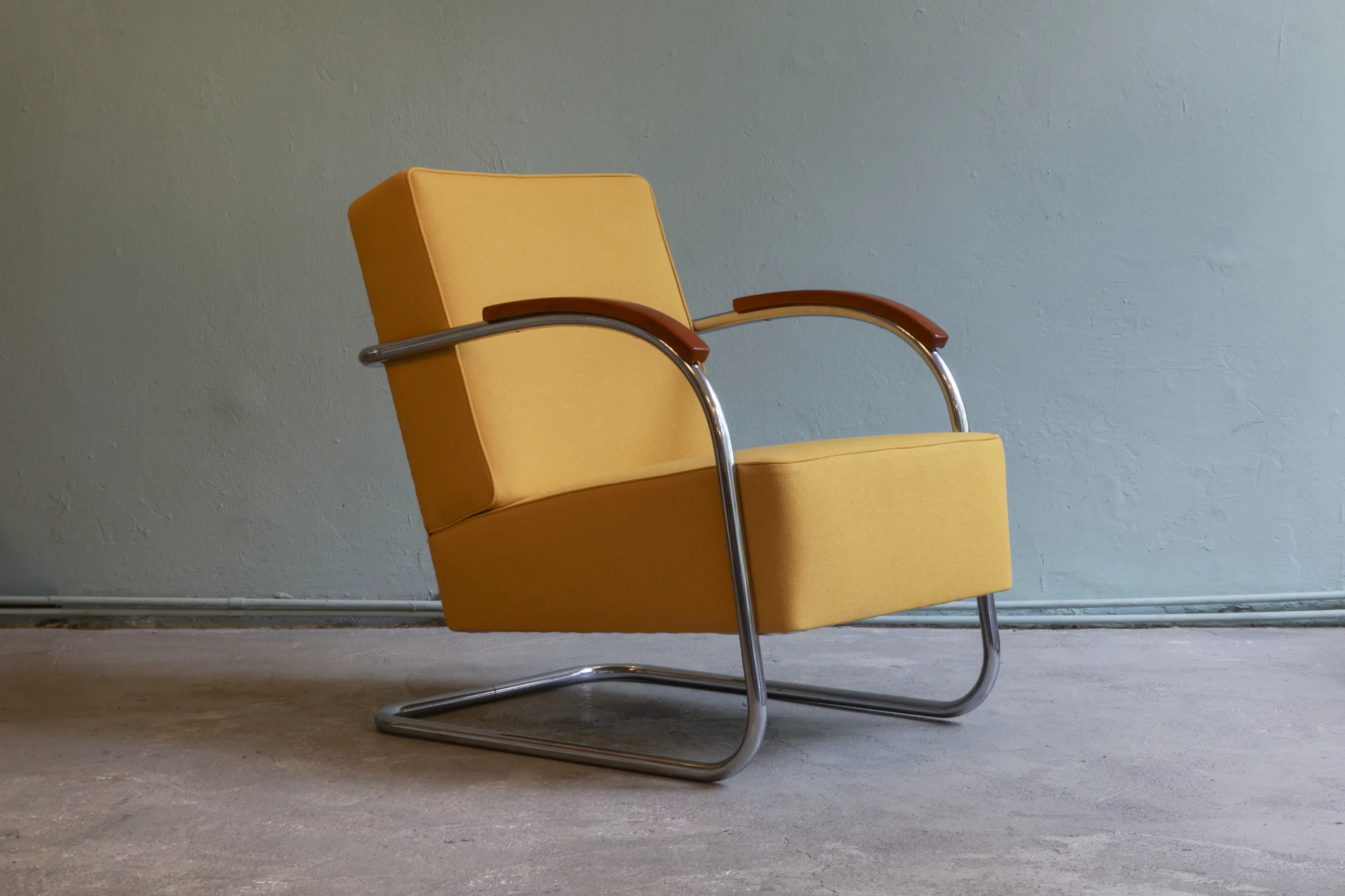
This cantilever chair is a design by Jindřich Halabala and was produced in the early 1930s by UP závody Brno in former Czechoslovakia. The model is documented under the designation H-164.
Model H 164 belongs to Halabala’s early tubular steel furniture and was created during the formative phase of the cantilever principle in Europe. Chronologically, the design stands alongside early tubular steel works by Mart Stam, Mies van der Rohe and Marcel Breuer, while expressing a distinct Czechoslovak position within early modernism.
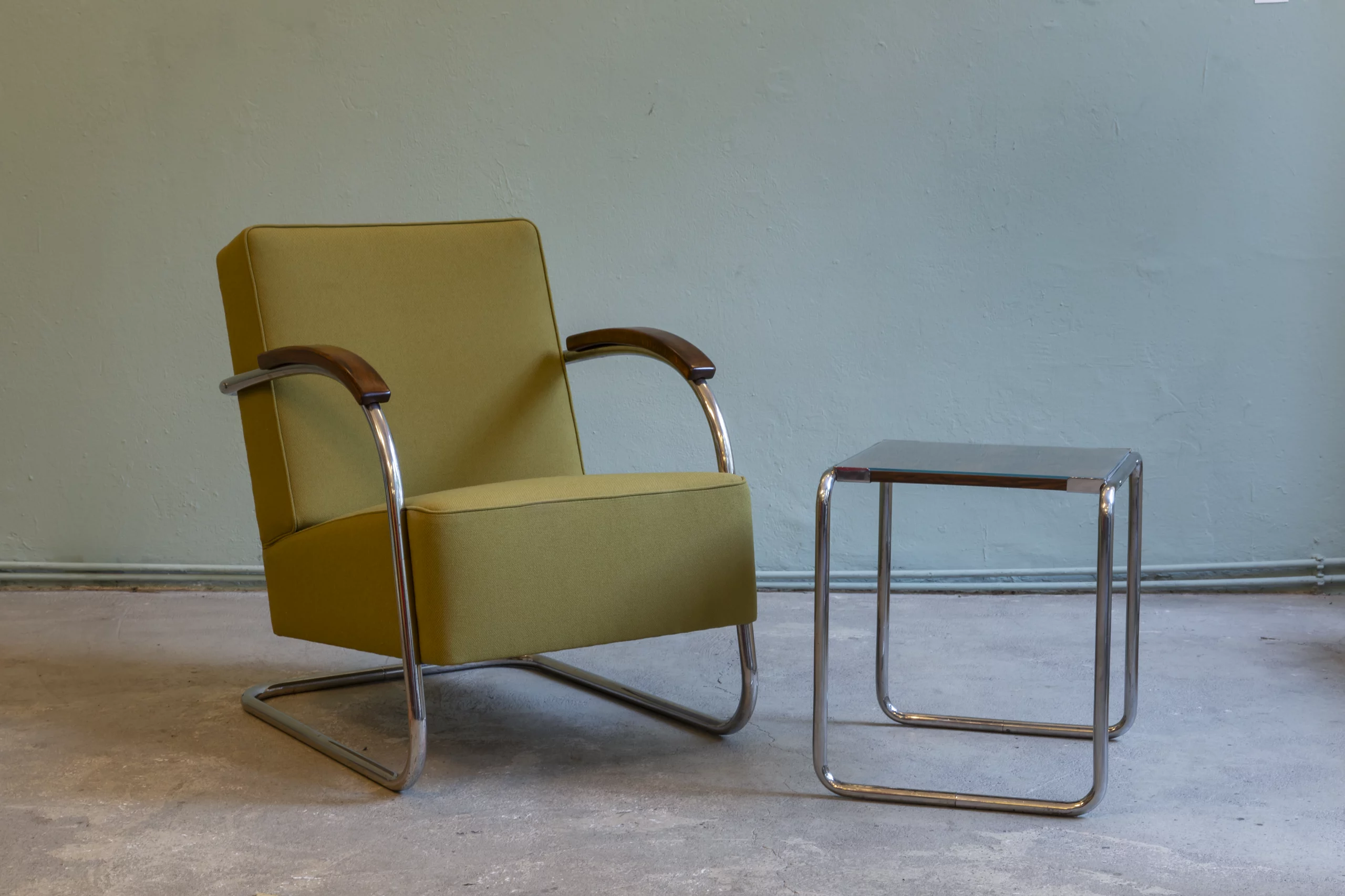
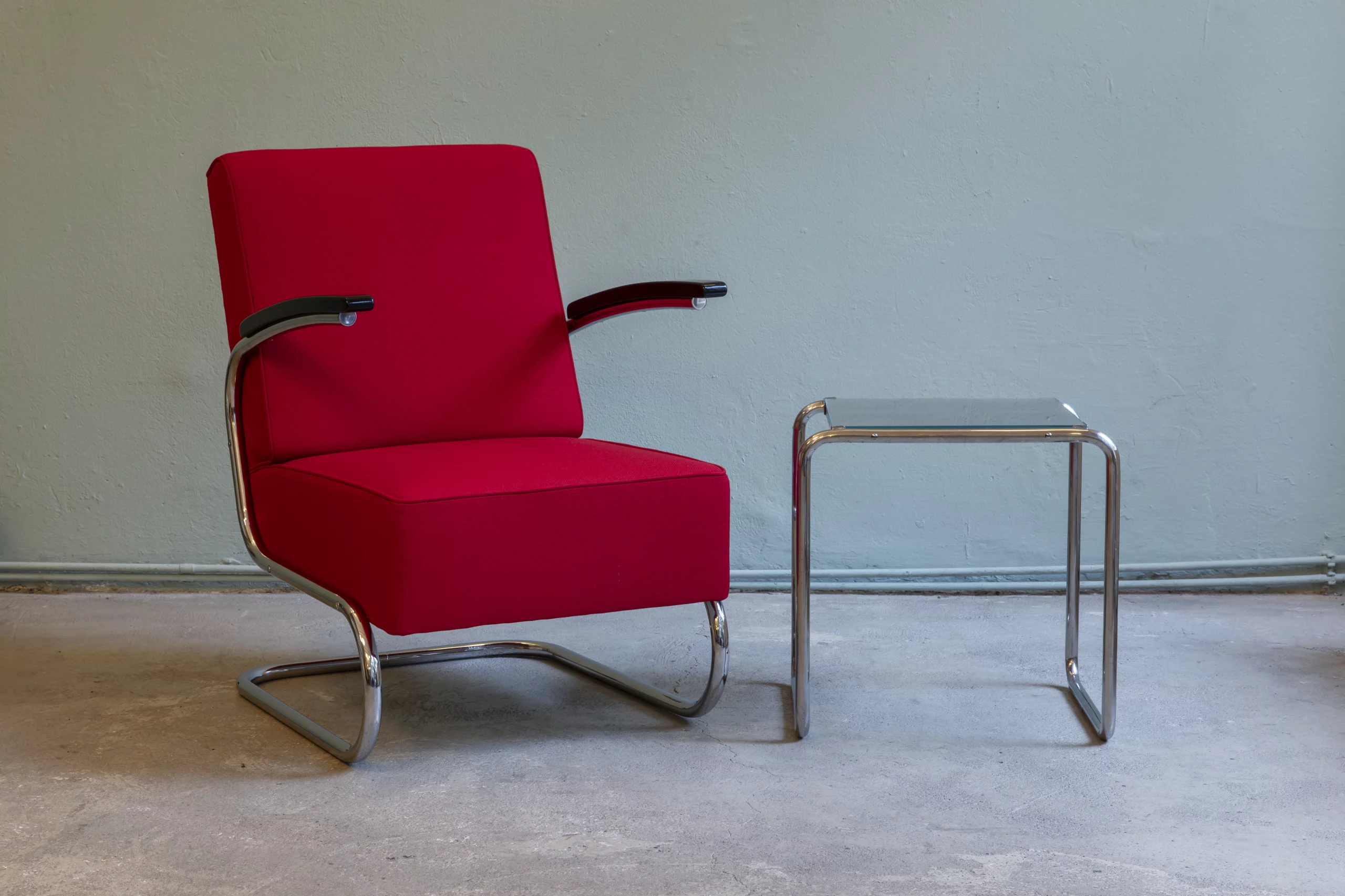
The frame is made of chromed tubular steel and features an uncommon technical solution: the backrest is mounted inside the frame and fixed from the outside, a detail characteristic of early experimental stages of cantilever construction. The structure is complemented by straight solid wood armrests, preserved in their original finish.
Seat and back retain their original Eisengarn upholstery, a metal-reinforced functional textile used only briefly during the early period of tubular steel furniture. The fabric remains taut and clean, showing only gentle, even light fading caused by natural ageing. The wooden armrests are likewise preserved in their original condition.
Due to its early production date, secure model attribution, rare construction details and its exceptionally well-preserved original condition, this chair holds significant art-historical and design relevance. All materials are original; the chair shows no signs of intensive use and survives in a museum-grade state of preservation.